
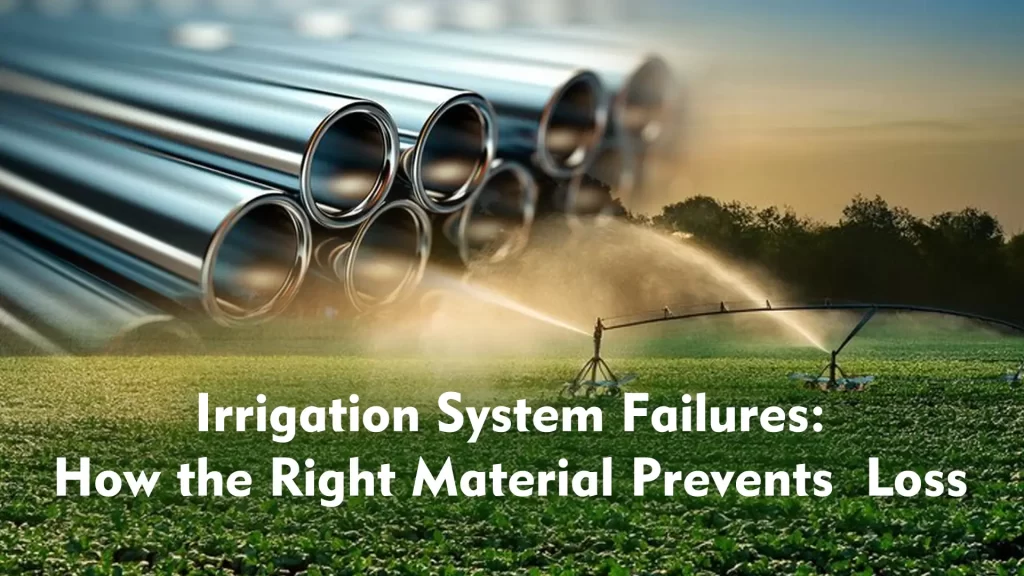
In modern agriculture, efficient water management is the backbone of productivity. Irrigation systems—whether drip, sprinkler, or surface-based—play a critical role in sustaining crops, especially in regions dependent on controlled watering. However, irrigation system failures can lead to significant water wastage, crop damage, and financial loss.
The good news?
Many of these failures are preventable by choosing the right material for your system infrastructure. From pipelines to connectors, the quality and durability of materials directly impact the performance and reliability of irrigation networks. Let’s explore how poor material choices contribute to system failures—and how the right materials can help prevent them.
Common Causes of Irrigation System Failures Before diving into material solutions, it’s important to understand the typical problems that arise in irrigation systems:
1. Pipe Corrosion and Leakage
Pipes made from low-grade or non-galvanized materials are prone to rust and corrosion, especially in high-humidity or mineral-rich soil conditions. This leads to leakage and pressure loss.
2. Cracking Due to Temperature Fluctuations
Materials that can’t withstand extreme heat or cold may crack, warp, or burst—resulting in water loss and system downtime.
3. Weak Joints and Connectors
Improper fittings or low-quality joints often become the weak points in an irrigation system. This leads to disconnections and frequent maintenance.
4. Low Pressure and Uneven Distribution
If the pipe material does not support the required pressure or flow rate, crops receive inconsistent watering, which affects yield quality and quantity.
Why Material Selection Matters Using durable, purpose-built materials ensures that irrigation systems remain functional and efficient for years. Here’s how the right material makes a difference:
1. Galvanized Iron (GI) Pipes
for Strength and Resistance GI pipes are corrosion-resistant, strong, and long-lasting—making them ideal for agricultural water transport. Whether it’s for borewell pumping, surface irrigation, or drip line distribution, GI tubes offer unmatched reliability, especially in high-moisture environments.
2. UV-Resistant PVC and HDPE Pipes
For surface and sprinkler systems, UV-resistant PVC or HDPE pipes work well as they resist sun damage, chemical corrosion, and internal scaling—ensuring smooth water flow.
3. High-Quality Fittings and Valves
Using robust connectors, valves, and joints minimizes the risk of leaks and pressure drops. Brass, stainless steel, or reinforced plastic fittings provide added strength to critical connection points.
4. Flexible Yet Strong Tubing
In drip irrigation, using materials that can bend without breaking ensures ease of installation and longevity—even on uneven terrain.
Here’s what you gain by investing in high-quality materials:
Reduced Water Wastage
Leak-proof systems conserve water, especially in drought-prone regions.
Lower Maintenance Costs
Durable materials reduce the frequency of repairs and replacements.
Improved Crop Yield
Consistent water supply leads to healthier crops and higher returns.
Operational Efficiency
Reliable systems mean less downtime and fewer manual interventions.
Irrigation system failures are not just technical issues—they directly impact food production, farm income, and resource efficiency. As agriculture becomes more technology-driven, choosing the right materials for your irrigation system becomes essential.
Whether you’re setting up a small farm irrigation line or a large-scale greenhouse system, investing in the right pipes, connectors, and structural supports ensures you’re building a system that performs—season after season.
Looking for reliable materials for your agricultural irrigation setup?
Naresh Ispat offers a range of high-quality GI tubes, pipes, and fittings suitable for agricultural use. Trusted by farmers and contractors across Gujarat, Naresh Ispat is your go-to supplier for long-lasting solutions.